Nobody searches for "proprioceptive input." People search for "how do I stop biting my nails." So this guide starts where you actually are: with the thing your body keeps doing that you wish it wouldn't.
Potato Tiger has mapped 14 of the most common habits to the fidget that redirects each one. Not randomly. Each match is based on a simple principle borrowed from clinical psychology, and it's the reason fidgets work for habits at all.
Why this works: the competing response
Psychologists have a well-studied treatment for unwanted repetitive habits called habit reversal training (HRT). It has two core pieces. First, you learn to notice the urge. Second, you perform a competing response: a different movement that uses the same muscles or satisfies the same urge, so the original habit can't happen at the same time. The classic examples are clenching a fist or sitting on your hands.
HRT has the strongest evidence of any approach for body-focused repetitive behaviors like nail biting, skin picking, and hair pulling. In one controlled trial with chronic nail biters, the HRT group grew their nails 22% longer than baseline after treatment versus 3% for the placebo group, and the gain held at follow-up.
Here's the connection: a good fidget is a competing response you can hold. Instead of clenching a fist for three minutes, you squeeze a stress ball. Instead of sitting on your hands, your hands have a textured ring to work. The fidget does the same job, except it's less awkward and you'll actually keep doing it.
Two honesty notes before the list. One: fidgets redirect a habit, they don't delete the urge. That's fine; redirection is the whole strategy. Two: body-focused repetitive behaviors are more common than people think, with studies putting prevalence around 12–14%. If picking or pulling is causing damage or distress, a fidget is a great tool to use alongside a therapist, not instead of one.
The habit map
Nail biting
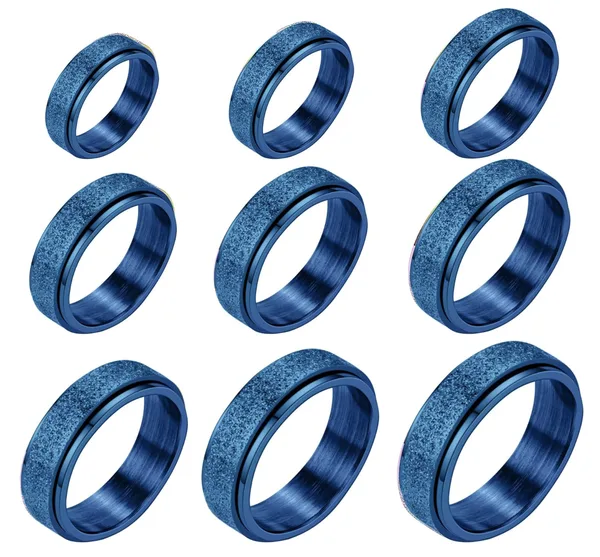
The fix: Picky pad or a textured fidget ring. Nail biting is usually two urges at once: fingers want to pick at an edge, and the hand wants to travel to the face. A picky pad gives the fingers an edge to work; a ring keeps the hand busy below the chin.
Bonus: Keep the fidget where the biting happens (desk, car, couch). The urge is situational.
Avoid: anything two-handed. You need one hand free to keep the other one occupied.
Skin picking (fingers, face, scalp)
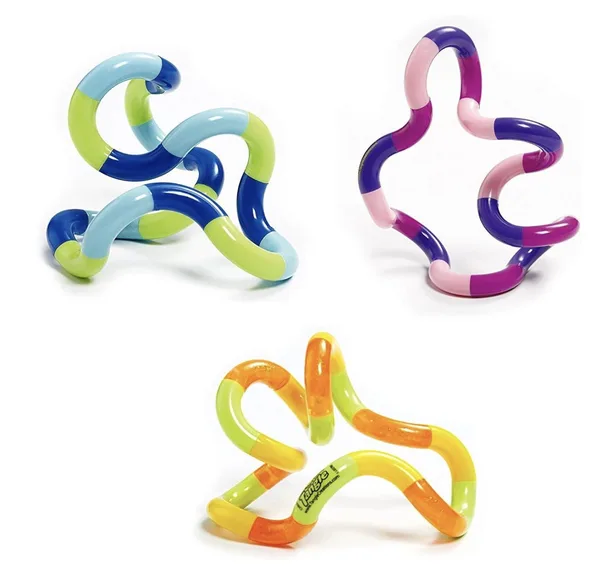
The fix: Picky pad, textured worry stone, or a Tangle. Skin picking is a search for bumps and edges. The picky pad is literally designed to be picked; the worry stone gives the thumb a groove to explore; the Tangle gives both hands a repetitive twist.
Research note: Skin picking responds less to self-help techniques than other habits, which is one reason to pair the fidget with HRT from a professional if it's causing wounds or scarring.
Avoid: smooth or featureless fidgets. The hand will go back to the skin to find texture.
Hair pulling
The fix: Tangle, or a stretchy string noodle. You want something that gives resistance and then releases. Some people do well with a small textured ball they roll between fingers to replace the post-pull fiddling.
Research note: Hair pulling (trichotillomania) is where HRT has the longest track record. Fidgets are a standard part of the competing-response toolkit therapists hand out.
Avoid: anything you hold at head height. Keep hands low.
Hair twirling
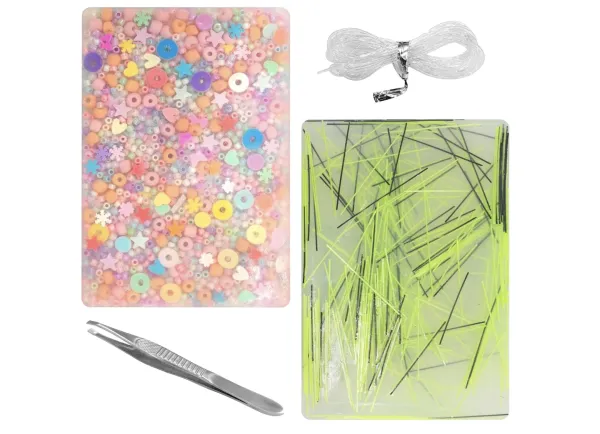
The fix: Tangle or Wikki Stix. Twirling is gentler than pulling; it's a self-soothing loop. Anything you can wrap around a finger and unwrap does the job, and bendable Wikki Stix are made for exactly that.
Avoid: hard, clicky fidgets. Wrong texture, wrong mood.
Pen clicking
The fix: A silent slider or a weighted metal fidget with a thumb groove. The pen clicker wants a satisfying press and the rhythm that comes with it. You can keep the press; you just have to lose the sound. A quiet slider gives the thumb its rhythm without making you the most hated person in the meeting.
Avoid: a fidget cube with a clicky side. That's just a pen with extra steps.
Finger tapping & drumming
The fix: Textured ring (roll it with the thumb to the same beat) or a worry stone. Tapping is almost always a focus behavior, not a stress behavior. The research on ADHD and movement says don't suppress it, redirect it to something silent. Rolling a ring gives the same tempo with zero sound.
Avoid: anything on top of the desk. Tapping migrates to whatever surface is handy.
Leg bouncing
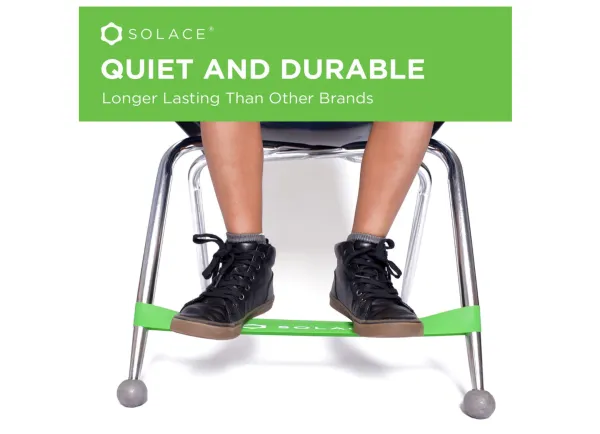
The fix: Chair band or an under-desk foot roller. This is the one everybody gets wrong. Leg bouncing is a leg need; a hand fidget won't touch it. A stretchy band across the chair legs lets the feet push and bounce silently. A foot roller does the same with a massage bonus.
For kids: Chair bands are the single most effective classroom fidget for the bouncers, per every teacher PT has consulted. Teacher guide here.
Avoid: trying to stop it. The UC Davis research says ADHD brains that move more during tasks perform better.
Desk kicking & chair rocking
The fix: Wobble stool or chair band. Kicking and rocking are a body asking for movement and resistance through the legs and core. A wobble stool gives constant micro-motion that quiets the urge. A chair band catches the kicks.
Avoid: punishing it. It's a sensory need, not defiance.
Chewing pens, sleeves, collars, hair
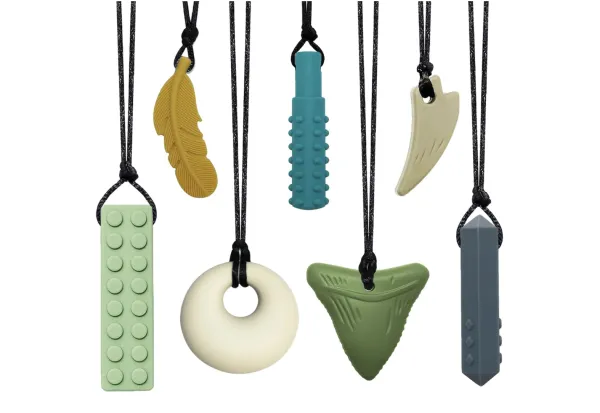
The fix: Chewable necklace or a chewable pencil topper. Chewing is its own sensory channel. No hand fidget replaces it, and telling someone to stop usually just moves it to a cheaper target (their lip). Food-grade silicone chewables give the jaw the work it's asking for. For adults, a chewy necklace that looks like jewelry is the move.
Avoid: gum as the only solution. It works, but it runs out and it's banned in most classrooms.
Lip & cheek biting
The fix: Chewable necklace (same as above) plus a squeeze fidget for the hands. Cheek biting is usually stress, so you want to address both the mouth and the nervous system. Squeezing a stress ball lowers arousal; the chewable gives the jaw a safer target.
Avoid: hard chewables if you're biting out of tension. Softer is calmer.
Knuckle cracking & hand wringing
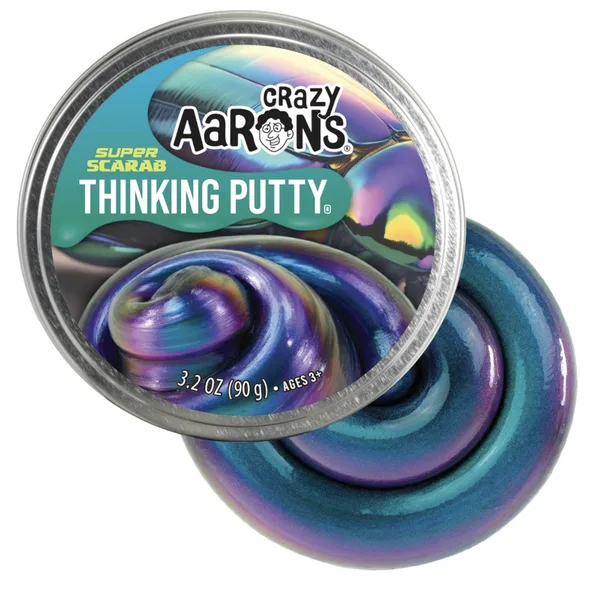
The fix: Thinking Putty or a dense stress ball. Both habits are about building tension and releasing it. Resistance fidgets give the hands a release that doesn't involve joints. Putty is especially good because squeezing, stretching, and pulling it covers every version of the urge.
Avoid: soft foam. Not enough resistance; the hands won't be satisfied.
Reaching for your phone every 90 seconds
The fix: A pocket fidget that lives exactly where the phone was. Half of phone-grabbing is pure hand habit: the hand goes to the pocket and finds the thing. Put a worry stone, metal slider, or ring there instead. The hand gets its object, the brain gets its small reward, and you don't lose twenty minutes.
Avoid: a fidget so interesting you look at it. Then you've just swapped screens.
Zoning out & staring
The fix: Textured ring or worry stone. Zoning out is the opposite problem from most on this list: not too much movement, too little stimulation. A small tactile fidget gives the brain a steady low-level input that keeps it in the room. This is the arousal-regulation effect from the fidgeting research.
Avoid: visual fidgets. Staring at a spinner is just zoning out with a prop.
Blurting & interrupting (kids, and plenty of adults)
The fix: A squeeze fidget used as a waiting cue. Teachers and OTs use this trick: the rule is "squeeze while you wait your turn." The squeeze gives the impulse somewhere to go for the few seconds it takes for the urge to pass, and it becomes a physical reminder that it isn't your turn yet.
Avoid: making it a reward or a punishment. It's a tool that's always available.
Quick-reference table
| Habit | Real need | Fidget fix |
|---|---|---|
| Nail biting | Pick + press | Picky pad, textured ring |
| Skin picking | Find texture | Picky pad, worry stone, Tangle |
| Hair pulling | Pull + release | Tangle, stretchy noodles |
| Hair twirling | Wrap + soothe | Tangle, Wikki Stix |
| Pen clicking | Thumb rhythm | Silent slider, metal fidget |
| Finger tapping | Tempo + alertness | Textured ring, worry stone |
| Leg bouncing | Leg movement | Chair band, foot roller |
| Desk kicking | Vestibular input | Wobble stool, chair band |
| Chewing things | Oral input | Chewable necklace / topper |
| Lip/cheek biting | Oral + stress | Chewable + stress ball |
| Knuckle cracking | Tension release | Thinking Putty, dense stress ball |
| Phone grabbing | Hand habit + reward | Pocket stone, slider, ring |
| Zoning out | Low alertness | Textured ring, worry stone |
| Blurting | Impulse hold | Squeeze fidget as a cue |
How to make the swap actually stick
HRT research points to three things that separate the people who succeed from the people whose fidget ends up in a drawer:
- Notice first. Awareness training is half of HRT for a reason. Spend two days just catching yourself in the habit. Where are you? What were you feeling? That's where the fidget needs to live.
- Make the fidget closer than the habit. It has to be in the hand, the pocket, or on the desk before the urge hits. If it's across the room, the habit wins.
- Hold the competing response long enough. Research on HRT suggests one to three minutes is the sweet spot. Use the fidget until the urge fades, not just for a second.
And a fourth from PT: expect a dose effect. The HRT studies found that people who practiced more improved more. The fidget isn't magic. It's a rep.
When to get more help: If skin picking, hair pulling, or nail biting is causing wounds, bald patches, infections, or real distress, that's a body-focused repetitive behavior disorder, and it's very treatable. A therapist trained in habit reversal training or related approaches is the gold standard. Bring your fidget. They'll approve.
PT's habit-fixing starter kit
The bottom line
Your habit is telling you what your body needs. Pickers need texture. Bouncers need leg movement. Chewers need something to chew. Match the fidget to the need, keep it closer than the habit, and hold it until the urge passes. That's habit reversal training with better accessories.
Potato Tiger's own habit is kneading. The competing response is a blanket. It has worked for years.
- Evaluating the Efficacy of Habit Reversal: Comparison With a Placebo Control (J Clin Psychiatry) — 30-adult nail-biting RCT, 22% vs 3% nail growth
- Rahman & Jafferany (2023) — Habit-reversal training for body-focused repetitive behaviour disorders; 12–14% prevalence
- Moritz et al. (2022) — Head-to-head comparison of self-help techniques for BFRBs (Behavior Modification); dose-effect, skin picking moderator
- Frontiers in Psychology (2023) — HRT and trichotillomania; competing response training overview
- University of Alberta — Habit Reversal Procedures (competing response duration, Twohig & Woods 2001)
- Popular Science — UC Davis research on ADHD movement and task performance
- Life Skills Advocate — Matching fidget tools to sensory systems (OT framework)
As an Amazon Associate, Top100Fidgets earns from qualifying purchases. This article is for informational purposes and isn't medical advice. If a habit is causing harm or distress, please talk to a healthcare professional.